Sediment Study of Upper Nyasem Khola Hydroelectric Project (43 MW)
Project: Upper Nyasem Khola Hydroelectric Project
Assignment: Sediment Study of Upper Nyasem Khola Hydroelectric Project (43 MW)
Location: Sindhupalchowk District, Nepal
Client: Sindhu Jwala Hydropower Limited
Duration: June 2018 to October 2018
Project Description: Upper Nyasem Khola Hydro-electric Projet (43 MW) is located in Gumba Village Development Committee of Sindhupalchowk District, Bagmati Zone Nepal. The site is located about 60 K.M. northeast of Kathmandu and about 32 KM north of Balephi Bazaar located along Araniko Highway. The proposed headworks site is located at Ombolde about 6 KM upstream from the confluence of Nyasem Khola and Balephi Khola at an elevation of 2809 masl. The flow from Nyasem Khola will be diverted to the Lampokhari Khola sub basin through headrace tunnel. Lampokhari Khola is tributary of Nyasem Khola. The desanding basin is proposed in the left bank in the surrounding area of Lampokhari. A small tyrolean type of intake has been proposed at Lampokhari Khola at an elevation of 2810 masl to collect the discharge from Lampokhari Khola. The added discharge from Lampokhari Khola along with the flow from Nyasem Khola will then be conveyed through a headrace canal proposed along the left bank to the forbay located at an elevation of 2801 masl. The water from forebay to the powerhouse will be conveyed through the penstock pipe. The powerhouse has been proposed to be located at an elevation of 1941 masl on the left bank of Nyasem Khola about 1.3 KM upstream from the confluence of Nyasem Khola and Balephi Khola.
Scope of Services:
1. Collection and gathering of the required accessories required for sediment sampling;
2. Set up lab at the site to store the equipment and samples;
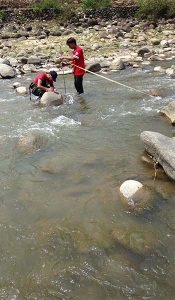
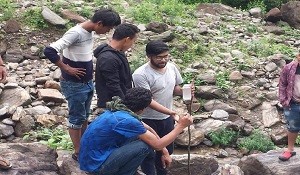
3. Appoint and train the site technician to carry out the sampling by point sampling method;
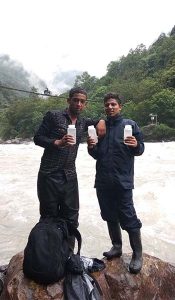
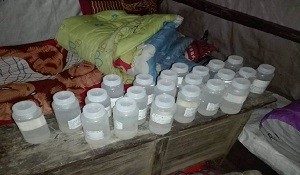
4. Collection of 1 sample per day for the time period of 4 months (June to September) using point sampling method;
5. Concentration Analysis of 122 nos of samples and Mineral and Particle Size Distribution Analysis of 16 samples;
6. Water Quality Test (One sample per month for 4 months); and
7. Preparation and submission of final lab report with sufficient photographs and all analysis results and other findings;
8. Equipment used:
a) Polylab bottles of 0.5 L capacity;
b) Filtration system and weighing accessories;
c) Drying Oven;
d) Trinocular Stereo Zoom Microscope; and
e) Beckman Coulter Particle Size Analyzer of range 0.4 micron to 2000 micron.